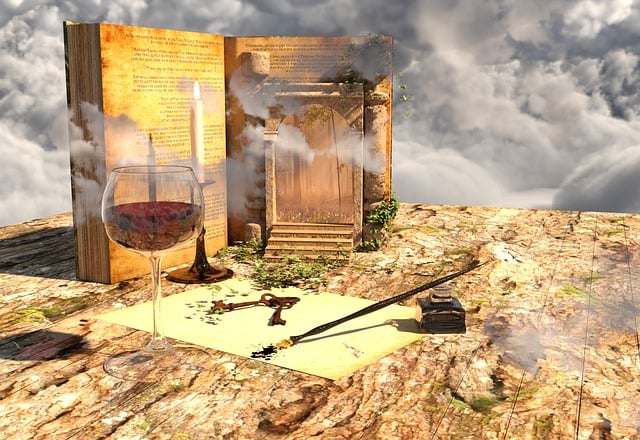

Featured Image by Andy from Pixabay
Every fantasy writer has lots of decisions to make when they begin to block out their next story, and our journey through the production of What God Has Ordained, Book One of The Legacy of Chandar was and is no exception. Everything from the beginning to the ending, heroes to villains, magic to monsters and more, sets both the structure and the tone for the tale. This has been true since the “classic fantasy” times of the immortals like J.R.R. Tolkein and Ursula LeGuin, and it remains true as we’ve emerged into a more “modern fantasy” style of storytelling in the 21st century.
But what makes a tale “classic fantasy?” What goes into a “modern fantasy” story? And where does The Legacy of Chandar fit on that scale? I recently spent some time exploring that question. Let me use a broad brush to show you what I discovered.
The Enduring Magic of Classic Fantasy
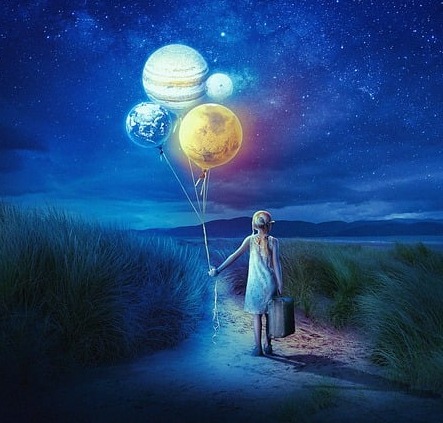
The early giants of classic fantasy were breaking new ground in storytelling. They weren’t just telling stories, they were building worlds from scratch, each with its own languages, mythologies, and moral frameworks. As new and fresh as the genre was at the time, like all literature it reflected the times in which it was written. Some of the elements and broad themes derived from classic fantasy are:
- Heroes’ journeys with clear moral messages
- So, so many sexist and racist tropes
- Usually told from a third-person omniscient perspective. Formal, grandiose, highly descriptive
- Medieval-inspired settings
- Magic was mysterious and largely undefined
- Straightforward good-versus-evil conflicts
- Eurocentric cultural influences
- Limited diversity in character representation—heroes were mostly white heterosexual males
- The same limited diversity in authorship—white, heterosexual males
- Originally available only in ink-and-paper volumes
These works were entertaining and they were formative, establishing fantasy conventions that would persist for generations. But as the decades rolled by new tale-tellers emerged, and each new generation re-formed the fantasy genre according to their own times.
Fantasy’s New Wave: Modern Fabulists, Bold Innovations
By the late 20th and early 21st centuries, classic fantasy had evolved into modern fantasy, with elements and themes reflecting the shades-of-gray, more chaotic, but also more inclusive times in which we live:
- Diverse protagonists and inclusive representation, in stories as well as authorship
- The narrative style is more dynamic and less formal
- Complex magic systems with defined rules and limitations
- Non-Western cultural influences and settings
- Explorations of social issues like racism, sexism, and colonialism
- Genre-blending (fantasy-mystery, fantasy-romance, &c.)
N.K. Jemisin‘s groundbreaking Broken Earth trilogy (transparency moment: I have not yet finished reading it) exemplifies modern fantasy’s evolution. It features a geologically unstable world, and uses fantastical elements to explore issues like power dynamics and systemic oppression. In my humble opinion, her unprecedented achievement of winning three consecutive Hugo Awards signals not only the quality and popularity of female authors into the genre, but also how the genre’s focus has expanded beyond mere escapism.
The Legacy of Chandar: Classic Fantasy With Some Modern Twists
So, where does The Legacy of Chandar land on this scale? On balance, I think you’ll find that these books take a very classical approach to fantasy.
- The heroes and their journeys come with clear moral (good/evil) and ethical (right/wrong) lines. They are are archetypally based and fit loosely into the “Chosen Ones” hero trope.
- And the antagonists are evil. No equivocation, no shades of gray.
- We use late medieval-inspired elements in this setting.
- Straightforward good vs. evil conflicts —you know who to root for, and why!
- However, there is somewhat of a limited diversity in character representation. At least through the first two books.
There are some modern fantasy elements, however:
- The story is primarily told by its TWO protagonists, giving it a more dynamic and engaging narrative style.
- One of the heroes is a heroine, so about half the story is told from a woman’s POV.
- Legacy of Chandar blends different genres—Fantasy and Romance, in this case.
- Sexism and sexual orientation become recurring sub-themes in the second book.
- Offered on a variety of platforms, such as print-and-paper books, ebooks, audiobooks, &c. Films and video games? Well, maybe!
The Authors’ Perspectives
Michael and I did not sit down to discuss any of that before writing the first drafts of this story. Perhaps we should have, but our way of using outlines combined with inspired improvisation means that we don’t always know what we’ve written until the last period tells us that we’ve reached the end. However, as I’m rough-editing the last draft, I’ve discovered the commonalities in our perspectives and styles that placed The Legacy of Chandar mostly in the classic fantasy camp:
Respect for tradition.
We both grew up reading classic fantasy and wanted to explore a story where adventure was relatively uncomplicated. We wanted to pay our respects to those early fantasy worlds with clear moral and ethical lines, but without the sexism and bigotry that unfortunately pervades a lot of classic fantasy tales.
The Longing for Certainty.
In these uncertain times we needed to remember what it was like when life less was relativistic, and more seemed certain. When we knew what personal integrity looked like when we saw it (and not only in fiction). That also goes for values like honor, loyalty, self-sacrifice, kindness, compassion, &c. As I blocked out Coralin’s background and personality, those were the core values I baked into her—and was delighted at where an adherence to those moral and ethical values took her in the story.
A Yearning for Morally Unambiguous Characters.
There are no antiheroes in the Legacy of Chandar series, just straight-up heroes who try their hardest to do the right things at the right times and for the right reasons. The villains ARE villains, and it’s easy to tell who you should be rooting for. Much of popular and historical fiction has devolved into reading or watching bad protagonists do bad things to other bad people while a lot of innocent bystanders get hurt and have their lives ruined. After years and years of this, I needed a literary and cinematic palate-cleanse!
No Apologies. Pure Escapism.
Like all of you, I have a real life, and I spend my time working and living in it. It’s not very exciting at a personal level. There are all the usual hassles: bills, budgets, housework, rude neighbors, aging bodies, slipping memories, and honey, what was for dinner again tonight? For my own sanity I need a healthy way to escape, to spend time losing myself and my cares in a fantasy world, especially in a classic fantasy world that doesn’t privilege straight white men over everyone else.
Not “Either/Or,” but “Both/And”
To wrap this up, the preference for either classical or modern fantasy is just that: a personal choice. It’s one that can be made over and over again with each new book we open. It is both possible and permissible to do an annual read-through of Tolkein’s Lord of the Rings trilogy and still enjoy Jemisin’s Broken Earth trilogy without making either choice a permanent, do-or-die part of your personal identity. And THAT is what is one of the greatest things about fantasy fiction: It changes with us, and it changes like we do, so there’s always a great classic or modern fantasy story just waiting for our next choice. We are fortunate to be living in a time where fantasy fiction has so much to offer!
So, that’s pretty much all I have to say on this topic, at least for now. This is your chance to use our comments section to tell us and our other readers about your latest fantasy read. Is it modern or classic fantasy, and is that your usual preference? How would you describe the protagonist(s)? What is it about the story that you find appealing? or off-putting? Would you recommend the book? Or read that author’s work again? Let us know—after all, the next best thing to reading a good fantasy tale is talking it over with fellow book lovers!
What God Has Ordained is available now! Get your copy today. And if you want more, more, more about fantasy and romantasy fiction, subscribe to our once-a-month-or-so newsletter, The Menelon Gazette! See the link in the sidebar to your right.
The Menelon Gazette
Enjoyed this? There's more where that came from — free reads, lore, and stories from behind the page, delivered straight to your inbox. No spam, unsubscribe at any time.