


If you’ve searched “what is romantasy” and landed here, I won’t imitate other blogs that make you scroll down to the bottom of the post to get it. Romantasy is a subgenre of fiction that treats fantasy and romance as equals — magic, war, prophecy, and politics on one hand; longing, tension, and a real love story on the other. Neither one is set dressing for the other. And THAT is its most enduring appeal.
Merriam-Webster made it official in February 2026, when romantasy finally got its own dictionary entry: “a subgenre of fiction that incorporates elements of romance and fantasy.” Their usage note is the part I actually like, because it gets at what separates romantasy from its neighbors — it “treats the romantic and erotic desires of its characters as equally important to their quest to resolve the magical and political tumult that surrounds them.” The word itself has been around since 1998. It just took twenty-some years, and a very online generation of readers, for the label to catch up to the shelf.
That’s the official romantasy definition. It’s accurate, but it is NOT why you’re still awake at 1 a.m. with one of these books in your hands.
Romantasy vs. Fantasy Romance: The Distinction That Actually Matters
I see these two terms used interchangeably all the time. It’s worth taking a moment to untangle that confusion, because the difference isn’t just academic. It changes what you should expect from the story you’re reading.
Take T. Kingfisher’s Paladin’s Grace, one of my favorite romantasies to date. It’s a clean example of romantasy doing exactly what romantasy is supposed to do: the fantasy stakes (a disgraced paladin, a poisoner’s plot, a god who’s gone silent) and the romance carry equal weight through the entire book. Neither one is there to serve the other. That’s the tell.
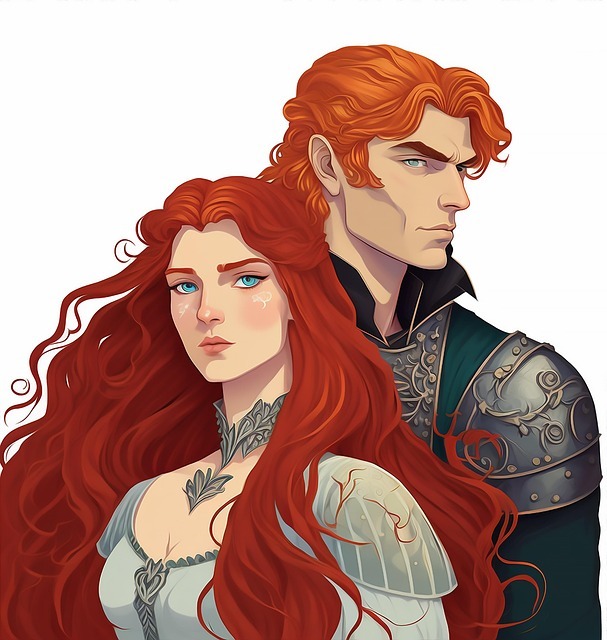
Fantasy Romance, by contrast, puts the romance in the driver’s seat. The fantasy elements are real — I’m not knocking them — but they exist to serve the love story. Genre convention being what it is, you can generally count on a happily-ever-after by the last page.
Romantasy doesn’t make you that promise. The fantasy conflict and the romance dance together, trading leads throughout the tale. They intertwine like lovers do. The fantasy side influences the romantic relationship just as the romance often determines what happens in the fantasy part of the tale. A happy ending isn’t guaranteed at the end of the book, and the relationship, like the plot, can take an entire series to resolve.
Our own book sits squarely on that side of the line. What God Has Ordained follows a priestess-knight and a crown prince who are both living inside a prophecy neither of them knows is theirs — and the war and the divine stakes carry exactly as much weight as the slow-burn romance between them, not less. If you finish it needing book two immediately, good! That’s the genre working the way it’s supposed to, not a story that ran long.
The Real Reason Readers Are Obsessed
Here’s what the dictionary definition can’t tell you: why this genre, specifically, right now.
What I hear from readers — younger ones especially — isn’t really about craft or structure. They want to climb inside the protagonists’ relationship and feel what those two characters feel, at full volume: love, fury, longing, revenge, ecstasy, joy, wonder, the whole range, one book at a time. Romantasy hands them permission to feel all of it, safely, without anyone standing over their shoulder judging them for it. That’s the draw I hear about most, and it’s coming overwhelmingly from an audience of women and girls telling me so directly.
The structural stuff is real too — readers say it, and I believe them — but I’d call it a secondary consideration next to that. Readers keep describing the same feeling to me, in different words: a world that’s completely coherent — its own rules, its own stakes, its own gods and politics — anchored by a relationship that actually goes somewhere. Not a subplot. Not a reward bolted onto the ending after the real plot’s been resolved. The relationship is one of the engines driving the story forward.
That combination does something a single-genre book just can’t. A pure fantasy can hand you an epic, high-stakes escape, but the emotional payoff is often distant — victory, not intimacy. A pure romance can hand you intimacy, but the stakes tend to stay personal, not world-shaking. Romantasy asks for both in the same breath: the gasp and the ache. The battlefield and the moment two people finally say the thing they’ve been circling for three hundred pages.
That’s also why it translates so well to BookTok and Instagram — short-form video is built for exactly that kind of gut-punch moment. That format didn’t invent the appeal; it just found a faster way to broadcast it. The real appeal is older and simpler than an algorithm: in a stretch of time when daily life feels genuinely uncertain for a lot of people, a story where the stakes are enormous and still resolve — where devotion is tested and doesn’t break — is its own kind of relief. I don’t think that’s an accident, and I don’t think it’s a small thing either.
Where to Start: Romantasy for Beginners
Romantasy isn’t a monolith — tone, heat level, and stakes vary wildly by author — so instead of one generic list, here are the best romantasy books for beginners from the specific corner of the genre I trust most: books where the fantasy and the romance are both doing real work, not just keeping each other company.
- T. Kingfisher, Paladin’s Grace — faith, guilt, and a slow-burn romance between two people who’ve both been broken by duty.
- Sue Lynn Tan, Daughter of the Moon Goddess — a banished goddess’s daughter hiding her identity at the Celestial Court, a forbidden romance, and a fight to free her mother that never takes a back seat to it.
- Shelby Mahurin, Serpent and Dove — a witch and a witch hunter, forced together, with neither storyline playing second fiddle.
- Danielle L. Jensen, The Bridge Kingdom — an arranged marriage, a spy princess playing a long game against the enemy king she married, and political stakes that never take a back seat to the romance.
If you’re drawn to the faith-forward, slow-burn end of that spectrum — a world with real gods, real stakes, and a romance that earns every inch of ground it gains — that’s the corner of romantasy that Michael and I write from. What God Has Ordained, Book One of The Legacy of Chandar, is next on that list, if I do say so myself. Read Chapter One free →
Then tell me in the comments: What got you into romantasy? I’d love to know which book did it for you.
We use AI as a tool in our creative process — for research, drafting, editing, and keyword optimization. All content contains our human creative output and reflects our own creative vision, voices, and over-riding editorial judgment.
The Menelon Gazette
Enjoyed this? There's more where that came from — free reads, lore, and stories from behind the page, delivered straight to your inbox. No spam, unsubscribe at any time.