Apple Books vs Amazon KDP: A Guide for Indie Fantasy Authors

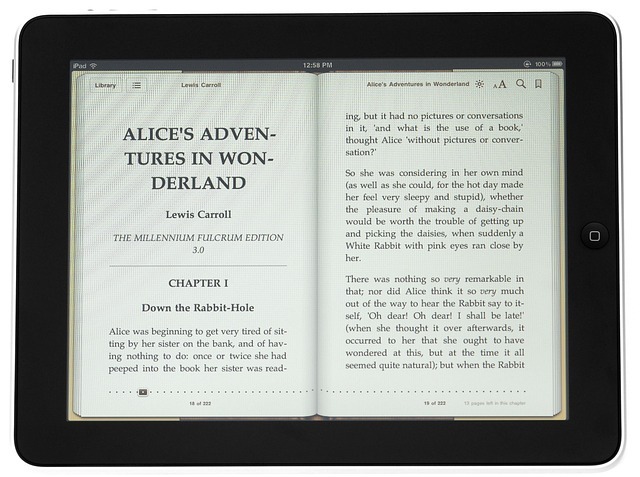
Featured image by WikimediaImages from Pixabay
If you’re among the indie fantasy authors who’ve just finished a manuscript — or, like us with our third book, What God Has Ordained, now available — one of the first questions you’ll find yourself staring down is: where do I sell this indie fantasy ebook?
That’s a bigger, more vexed question than it sounds. There are a handful of major ebook platforms, and the two that almost every indie author considers first are Amazon KDP and Apple Books. They’re the biggest names, and in some ways they couldn’t be more different. The choice between them isn’t just logistical. It has real implications for:
- your royalties (how much you earn per book),
- your discoverability (how easy it is for readers to find your book),
- and your sanity (directly related to how much control you want to have).
Michael and I have been looking around at the best platform for indie authors for quite awhile now, and I’ll tell you upfront: There is no one-size-fits-all answer here. But I can walk you through the key differences, share what we’ve learned, and give you my thoughts on which platform seems to make more sense — and why.
Apple Books vs Amazon KDP: What’s the Difference?
Amazon KDP (Kindle Direct Publishing) is the 800-pound gorilla of indie ebook publishing. It commands the largest share of the US ebook market by a wide margin. If you choose to publish there, your book will be in front of the largest single pool of ebook readers in the country. KDP is free to use, and setup is relatively straightforward. You upload your manuscript, fill out the details forms, set your price, and you’re in business.
Apple Books for Authors is Apple’s self-publishing portal — free to use, with a clean interface and direct access to Apple’s enormous installed base of iPhone, iPad, and Mac users. Their audience is smaller than Amazon’s, but it’s genuinely different in ways that matter. More on that below.
The comparison gets interesting when you look at what each platform costs you — not in setup fees (neither charges any), but in what they ask you to give up.
Let’s Talk Royalties: KDP vs Apple Books
Up front, both platforms offer a 70% royalty rate, but it’s never that easy. The devil, and the real profits, are in the details.
KDP’s 70% rate comes with conditions. Everything you do on KDP has conditions. In fact, its conditions have conditions. First up, your ebook has to be priced between $2.99 and $12.99 to qualify — Amazon raised this band from its old $9.99 ceiling in July 2026, the first increase since 2007. Price it below $2.99 or above $12.99, and your earnings rate drops to 35%. If you’d already priced a title in the old $10–$12.99 “no-man’s-land,” note that Amazon doesn’t switch you over automatically — you’ll need to opt in yourself..
Additionally, Amazon deducts a delivery fee of $0.15 per megabyte at the 70% tier — so a typical fantasy novel, depending on file size, will cost you somewhere in the neighborhood of $0.30–$0.60 of every sale before you ever see a penny.
Apple Books’ royalty rate of 70% has no such conditions. Apple pays a flat 70% on any price point — $0.99, $14.99, whatever you decide to charge. There’s no delivery fee. You set the price, they take 30%, you keep 70%. Full stop.
For indie authors who want to price their work at a premium, that gap has narrowed since KDP’s July 2026 change — a $12.99 fantasy novel now qualifies for 70% on both platforms. But Apple’s flexibility is still uncapped: price at $14.99, $19.99, whatever the market bears, and you still keep 70% with no delivery fee eating into it. KDP’s 70% tier still tops out at $12.99, and the per-megabyte delivery fee still applies underneath that ceiling. So Apple remains the more flexible option for genuinely premium pricing — just by a smaller margin than it used to be.
The Exclusivity Question for Indie Fantasy Authors, and Everyone Else: KDP Select and Kindle Unlimited
Here’s where the choice gets a lot more complicated, especially for fantasy authors.
KDP Select
Amazon offers an optional program called KDP Select, which enrolls your ebook in Kindle Unlimited (KU). KU is Amazon’s subscription service — readers pay a flat monthly fee and can read as many enrolled books as they want, and you get paid a small amount per page read (currently a rather dismal $0.004–$0.005 per page).
Does that sound appealing? For some authors, it absolutely is. The KU subscriber pool is massive, and fantasy readers in particular are voracious. They plow through books. And because they’re already subscribed, the barrier to trying a new author is non-existent.
The big fat catch is that KDP Select requires 90-day exclusivity to Amazon. If your ebook is enrolled in KDP Select, it cannot appear anywhere else. You can’t even sell it on your own website. You’re Amazon’s for that 90-day window, and the enrollment auto-renews unless you opt out.
Amazon claims that opting-out is easy, but for us, just trying to UN-enroll was a stressful struggle with AMZN that lasted for over a month. Eventually we just gave up because no matter how we went about it, KDP Select would not let go of that book. I do hope and assume that this bug or preference has been better resolved as the years have passed.
Apple Books: Simplicity, Service, but a Smaller Audience
Apple Books, by contrast, has no exclusivity requirements whatsoever. You can sell on Apple and Amazon and Kobo and everywhere else simultaneously.
For authors with no existing audience and no email list, the KU subscriber base is a legitimate discovery engine — and fantasy and romantasy readers are among its heaviest users. But, for an author who has an established readership or who values the freedom to sell everywhere, locking yourself into Amazon’s exclusivity can cost you more in lost sales on other platforms than you gain in page reads.
Discoverability: Amazon’s Big Advantage
I’m not going to pretend this isn’t a real difference, because it is.
Amazon’s search and recommendation algorithms are, to put it bluntly, extraordinarily good at connecting readers with books they didn’t know they were looking for. If your romantasy novel starts getting traction — good reviews, decent sales velocity, readers adding it to lists — Amazon’s system notices and starts pushing it into “Customers also bought” sections and recommendation emails. The flywheel, once it starts turning, can turn fast.
Apple Books is improving on this front, but organic discovery on Apple is still harder. Where Apple does shine is in editorial features — Apple Books has actual human editors who curate themed collections, and getting your book featured in one of those can be significant.
The practical reality is that wherever you sell indie fantasy ebooks, Amazon is where most readers will find you first, especially early on.
So Why Bother with Apple Books at All?
From what I have discovered, there are a few reasons, actually — and they’re worth taking seriously.
- Apple’s readers are different. iPhone and iPad users skew toward readers who are willing to pay full price for a book. The price-sensitivity that shapes so much of what happens on Amazon (the race to $0.99, the permafree first-in-series strategy) is less pronounced on Apple. If you have a premium product — a well-edited, professionally designed fantasy novel — Apple’s audience is more likely to pay what it’s worth.
- Apple’s global reach is substantial. Apple Books operates in over 50 countries. For indie authors who are already getting traction in the US and want to find readers in international markets — particularly English-speaking ones outside the US — Apple is a genuinely valuable channel.
- And most important: being on only one platform is a business risk. Amazon changes its algorithms without notice. KDP Select terms have shifted dozens of times over the years. Putting your entire livelihood on just one company’s infrastructure, subject to one company’s decisions, is a precarious place to be. Going wide — selling on multiple platforms including Apple Books — is a hedge. It may not seem to be exciting, but from experience I can tell you that neither is waking up to discover that an Amazon algorithm change has just tanked your income!
What Michael and I Actually Recommend
For a brand-new indie fantasy author with no existing readership, I think starting with KDP Select for a launch period — one or two 90-day windows — makes tactical sense. The KU subscriber base is real, fantasy readers love it, and the promotional tools (Free Days, Countdown Deals) can give a debut title a genuine boost. Consider the exclusion time as a time to prioritize building your reader base, collecting reviews, and getting some momentum. Expecting to turn a profit via KDP Select at the first go is probably not a great idea.
But, once you’ve got traction, consider going wide. The conventional wisdom in the indie author community seems to be that wide publishing adds somewhere between 15–30% on top of your Amazon revenue — if you actually work it, which means setting up promotions on Apple, submitting to Apple editorial, and not just uploading and forgetting about it. (That last part is where a lot of authors drop the ball.)
If you already have an audience — from a newsletter, a social media following, a previous publishing career, whatever — you may well be better off going wide from day one. Your readers will find you wherever you are, and you keep all your options open.
Neither choice is permanent, by the way. KDP Select is a rolling 90-day enrollment, and (technically) you can opt out. You can try KU, decide it’s not for you, and go wide. You can start wide and try KU later. The publishing landscape shifts, and the smartest indie authors treat their distribution strategy as something they revisit regularly, not a one-time decision carved in stone.
The Bottom Line
Apple Books vs Amazon KDP isn’t really an either/or for most authors in the long run — it’s a when and a how. Amazon is where the volume is, especially for fantasy and romantasy. But Apple Books offers better royalty flexibility, a premium readership, and protection against the single-platform risk that comes with Amazon exclusivity.
The best platform for indie authors is rarely just one platform. It’s the combination that fits your specific situation, your readership, and where you are in your career.
What’s your publishing setup? Are you KDP exclusive, an Apple Books fan, going wide, or somewhere in the midst? I’d love to know what’s working for you — scroll down and leave me a comment!
Speaking of that third book — What God Has Ordained is available now. Get your copy here.
Have thoughts on Apple Books vs Amazon KDP from your own experience? Drop them in the comments below — and if you found this useful, subscribe to The Menelon Gazette for more indie publishing insights from Michael and me.
Sources consulted:
- Amazon KDP eBook Royalties
- KDP Royalty Rates 2026
- Apple Books for Indie Authors — ScribeCount
- Publishing on Apple Books vs Amazon: A Complete Guide 2026
- Kindle Unlimited vs Wide Publishing 2026
- Romantasy Publishing Platforms: Complete 2026 Guide
We use AI as a tool in our creative process — for research, drafting, editing, and keyword optimization. All content contains our human creative output and reflects our own creative vision, voices, and over-riding editorial judgment.
The Menelon Gazette
Enjoyed this? There's more where that came from — free reads, lore, and stories from behind the page, delivered straight to your inbox. No spam, unsubscribe at any time.