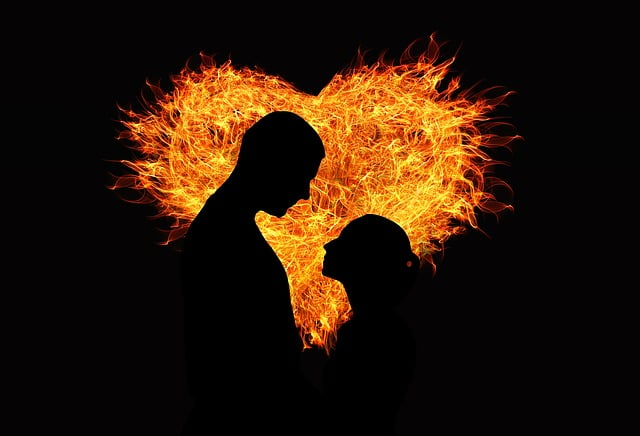

Featured image by Gerd Altmann from Pixabay
If you ask ten romantasy readers what they’re actually craving when they pick up a new book, the term “slow burn” comes up almost every time — right before they add “but it has to be done right.” Everyone knows a slow burn when they feel it working. Fewer people, readers or writers, could tell you why it works.
Turns out, there’s an actual mechanism behind it. And if you are a writer, once you understand the mechanism, you can write to it on purpose instead of just hoping the tension lands.
What Is Slow Burn Romance, Really?
The short version: slow burn romance is a love story built around delaying emotional or physical resolution between two characters the reader already wants to see together — using proximity, tension, and near-misses to stretch that wanting out over as many pages as the story — and the reader’s endurance — can bear.
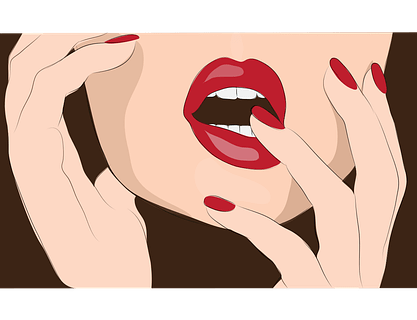
When you know the reason why it works like it does, the subject gets even more interesting. Neuroscientist Dr. Sydney Ceruto, who writes on the brain science of attachment and reward at MindLAB Neuroscience, breaks down the mechanism in detail: the brain’s dopamine system fires most intensely not when a reward arrives, but while it’s still being anticipated.
Read that again. Then let me shorten that whole sentence down to five words: Longing is stronger than having. And it is the secret to every successful slow burn romance on the market.
That’s it. Every scene where the characters almost say it, almost touch, almost cross the line and don’t — that’s not filler between the “real” moments. That is the reward, dopamine coursing through our bodies in ever-rising waves. But don’t worry. Delaying that payoff, done well, doesn’t frustrate the anticipation. It intensifies it.
Ceruto also mentions “hyperbolic discounting” — a $100 word for a simple truth: anticipation gets more intense the closer the payoff feels. Which means a slow burn that simmers at the same level for three hundred pages isn’t actually doing its job. The tension has to escalate as the resolution gets closer, or the anticipation flatlines instead of building.
Gotta love science! And here’s what that means for the page.
Three Techniques That Escalate the Burn
- Make every near-miss closer than the last. Don’t just repeat the same “almost” beat — a near-touch, an interrupted confession, a charged silence — over and over at the same intensity. Each one needs to close a little more distance than the one before it, physically or emotionally, so the reader feels the burn tightening rather than looping. If your characters “almost kiss” in chapter four and “almost kiss” again in chapter eighteen with nothing structurally different about it, the reader’s anticipation doesn’t build.
- Give the destination more certainty than the route. Some of the most durable slow-burn structures — fated mates, prophecy-bound pairs, anything where the reader knows early these two end up together — work because they separate two different kinds of tension. The outcome is settled, so the reader isn’t anxious about whether it happens. The path stays unpredictable, so they stay hooked on “how.” That combination lets you sustain a burn for a genuinely long stretch without the anxiety that comes from true will-they-won’t-they uncertainty.
- Maximize the apparent reason they can’t be together. Slow burn needs friction to burn against, and the better the friction, the more intense the burn becomes. “Enemies-to-lovers” is in my opinion the easiest technique to use, because it uses open hostility to make it work. “Forbidden-by-circumstance” works the same mechanism from a different angle: a duty, a vow, a family role, a line one or both characters have told themselves they’d never cross. The bigger and more legitimate that obstacle feels, the longer you can stretch the burn before it stops escalating and starts to stall.
The Case Study I Know Best
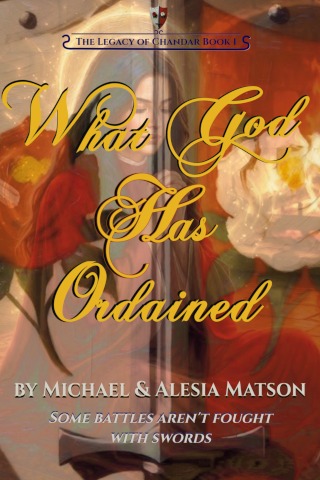
All writers get that “write what you know” advice at some point in their lives, mostly because it’s good advice. To honor it I’m reaching for the slow burn I understand the most completely, because I helped to build it. Let’s talk for a minute about the slow, slow burn in What God Has Ordained.
In What God Has Ordained, Coralin and Athos were raised as foster siblings. For years and years, that’s how they thought of each other: brother and sister, sister and brother. The obstacle causing friction between them isn’t a misunderstanding or a grudge. It’s not something they could settle with about fifteen minutes of honest conversation — it’s fifteen years of both of them insisting, out loud and to themselves, that what they feel is family love and nothing else. That’s the “reason they can’t” doing its job before either of them has said a word to the other about it.
As the “we can’t because we’re family” fades, their commitment to living lives of honor heaps even more friction in their way. Athos and Coralin exist in a class-driven culture with clear rules about marriage among the nobility. Athos’ marriage is in the hands of the king and his councilors. He must marry for the betterment of the kingdom. His own preferences in the matter are secondary, at best. This is the price of high rank among the Medini: Sure you’ve got lots of power and wealth, but the most important relationship in your life is not your own to choose. For him to do so in the face of several thousand years of precedent is the kind of thing that has consequences. Huge, fat, hairy ones.
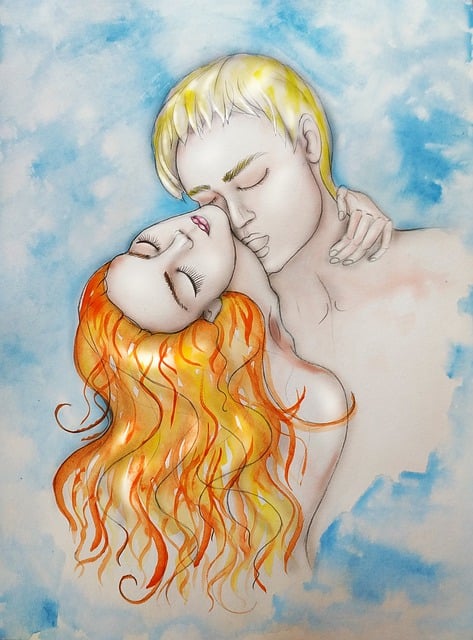
Add in the prophecy — the “destination” made more certain by something bigger than either of them choosing it — and you get a burn with the shape I described above: where their relationship is going feels inevitable, but how they get there absolutely does not!
Like most other romantasy readers, I groove on that slow burn vibe. The slower it is, the more intense it becomes. As a romantasy writer, I can tell you that the process is a lot easier to explain successfully than it is to put on the page. It takes a willingness to practice, to refine, as well as a way to keep those encounters “fresh” in your psyche, because the repetitive act of rewriting the same scene several times will eventually snuff that burn and turn it into ashes. There were several moments in WGHO where I had to stop working on those “near miss” scenes for awhile to let my body and mind reset. If I turned back to those scenes later and started to squirm in anticipation, only then did I know I’d gotten it right.
Writing the Burn, Not Just the Wait
If there’s one thing you should take from the neuroscience, it’s this: slow burn isn’t about how long you wait. It’s about whether the wait keeps getting harder to bear. A burn that just sits still for two hundred pages isn’t slow burn — it’s just slow. A burn that tightens, scene by scene, until the reader is holding their breath right along with your characters? That’s the one people can’t stop talking about after they finish the book.
Have a slow burn that wrecked you completely, as a reader or a writer? I’d love to hear about it — drop it in the comments.
We use AI as a tool in our creative process — for research, drafting, editing, and keyword optimization. All content contains our human creative output and reflects our own creative vision, voices, and over-riding editorial judgment.
The Menelon Gazette
Enjoyed this? There's more where that came from — free reads, lore, and stories from behind the page, delivered straight to your inbox. No spam, unsubscribe at any time.