
Featured image by Lisa Yount from Pixabay
I’m going to say something that might ruffle a few feathers in certain writing circles: tropes are not the enemy.
Michael and I have been building the World of Menelon since 1994, and I can tell you with absolute certainty that What God Has Ordained — our epic romantasy, now available for pre-order — is full of them. Forbidden love. The wise mentor. Class conflict standing between two people who have no business falling for each other. If you’ve spent any time in the romantasy genre, you’ve seen all of these before.
And yet.
The beta readers for WGHO cried. So did I, when their feedback came back. Which tells me that the tropes aren’t the problem. How we, as authors use them is.
Why Fantasy Tropes Still Work
Tropes persist because they’re doing real emotional work. They’re shortcuts to feelings readers already know how to have — anticipation, longing, grief, triumph. When a reader picks up a romantasy and spots the forbidden love setup in chapter two, they don’t groan and put the book down. They lean in, because they know what that setup promises, and they want to see how this particular author is going to deliver on it.
In my opinion, the mistake writers make isn’t using classic fantasy tropes. It’s using them without asking why they work — and therefore missing the thing that makes them matter.
The Forbidden Love Trope: Still Earning Its Keep
Of all the fantasy tropes that still work, forbidden love might be the most reliably powerful. And the reason is simple: it externalizes internal conflict. The characters aren’t just fighting their feelings — they’re fighting history, law, expectation, and the weight of everyone who came before them.

In WGHO, Athos and Coralin’s situation has two layers of “forbidden” stacked on top of each other. They were raised together as foster siblings — which is already the kind of bond that rewires how people see each other, in ways neither of them asked for. But Athos is also the royal heir to Vin-Nórë, and the crown doesn’t hand princes the luxury of marrying for love. There are protocols. Expectations. Centuries of tradition with no interest in anyone’s feelings.
Here’s a moment from the manuscript — Athos and his old ystäv Vidhuri, watching Coralin dance at a celebration while Athos tries to convince himself the whole thing is simply not possible:
“Not possible,” Athos repeated, then paused as the jig ended, eyes still on Coralin, and waited through the loud, raucous applause before adding, “My marriage is in Vin-Nórë’s hands, whether I like it or not.”
“I repeat: Why not? So your marriage is technically in your brother’s hands. You need his approval. Who says you’re not going to get it?”
Athos stared at the old ystäv in disbelief. It was a tradition as old as Vin-Nórë itself…
What makes this version of the trope feel fresh isn’t a subversion — Athos’ and Coralin’s love really is forbidden, by real structural forces, not just parental disapproval or a misunderstanding that could be cleared up in five minutes. The stakes are load-bearing. That’s the difference between a trope that resonates and one that falls flat.
To make forbidden love work in your own writing, ask yourself:
- What specifically is doing the forbidding? Name it. Make it concrete.
- Does the obstacle have genuine consequences, or can it be solved with a well-timed conversation?
- Are both characters active in their struggle, or is one just waiting for the other to decide?
- Does each character stand to lose something — not just in love, but in identity, loyalty, or duty — if they choose each other?
The more load-bearing the obstacles, the more earned, and earnest, the resolution.
The Wise Old Mentor: A Trope We Could All Stand to Take More Seriously
Here’s one that gets unfairly maligned. We live in a youth-worshipping culture that has, to put it diplomatically, a complicated relationship with age. We simultaneously dismiss older people as out of touch and strip-mine their life experience for content the moment it becomes convenient. Fantasy, to its credit, has always known better.
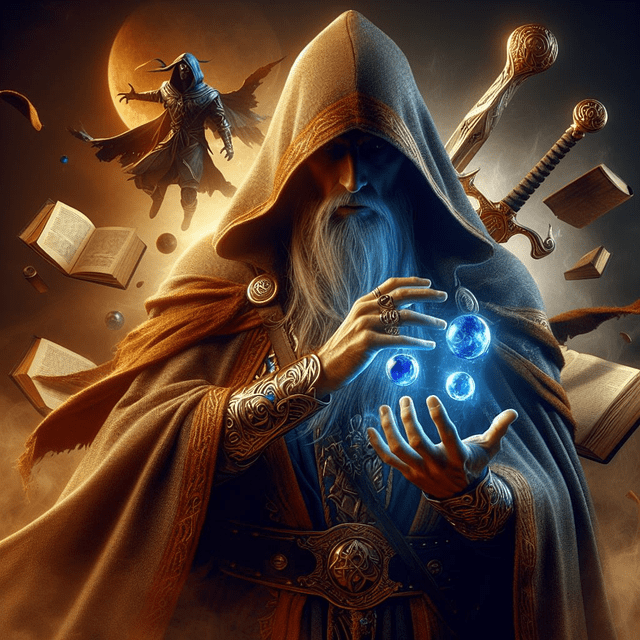
The wise mentor trope endures because it addresses something real: the gap between what we know and what we haven’t yet lived long enough to understand. A good mentor character doesn’t just dispense plot-convenient information. They carry the weight of having already made the mistakes the protagonist is about to make — and they know, usually from painful personal experience, that they can’t simply hand over the lesson. It has to be learned.
General Vidhuri Ashalon, head of the Vin-Nórëan chaplain’s corps in WGHO, is a good example of what this trope looks like when it’s working properly. He’s a battlefield cleric and spiritual advisor — competent in a fight, quietly formidable — who serves as a kind of irritating mirror for Athos. He sees the truth about Athos’ and Coralin’s feelings for each other well before either of them will admit it, and he delivers his insights through riddles and affectionate teasing rather than speeches. Athos thinks of him as his “irritating ystäv.” The fondness and the exasperation are completely inseparable.
What Vidhuri doesn’t do is exist purely to explain the plot and then conveniently die at the emotional midpoint. He has his own perspective, his own humor, his own investment in the outcome. He’s a person who happens to be wiser than the protagonist — not a wisdom-delivery system wearing a person suit.
To stop your mentor from going flat:
- Give them something they’re wrong about. Wisdom isn’t omniscience.
- Let them be affected by events, not just observant of them.
- Make their relationship with the protagonist specific — not generically warm, but particular to who these two people are.
- Consider what they want for themselves, separate from what they want for your protagonist.
The Real Secret to Making Overused Fantasy Tropes Feel Fresh

It’s not simply “subversion.” Subversion for its own sake — the mentor who turns out to be the villain, the chosen one who refuses the call and goes home — can be just as predictable as the trope it’s reacting against.
The secret is specificity.
A forbidden love story set against generic “societal expectations” is forgettable. A forbidden love story where a royal heir watches the woman he loves dance across a crowded room, knowing that his kingdom’s marriage laws are older than his own name, is something else entirely. The trope is the same. The specificity is what makes it land.
Know why your chosen trope works. Then make every element of it — the characters, the obstacle, the stakes, the resolution — specific to your world, your people, and your story. The reader will recognize the shape of it. What they won’t be able to predict is what it feels like in your hands.
That’s the whole game.
Athos and Coralin’s story, along with the irrepressible Vidhuri Ashalon, will be told in full in What God Has Ordained, Metaphor Publications’ third title — available now for pre-order, publishing October 1st. Read the full pre-order announcement.
We use AI as a tool in our creative process — for research, drafting, editing, and keyword optimization. All content contains our human creative output and reflects our own creative vision, voices, and over-riding editorial judgment.
The Menelon Gazette
Enjoyed this? There's more where that came from — free reads, lore, and stories from behind the page, delivered straight to your inbox. No spam, unsubscribe at any time.