
Wildwood opened in theaters this weekend, and if you’ve seen it, you already know that the forest in LAIKA’s movie isn’t the pretty kind. It’s the kind that steals children — Prue’s little brother Mac, carried off by a flock of crows before the story’s even properly started. In other words, an enchanted forest crawling with something that isn’t human. This raises an interesting question: what’s actually supposed to be living in wild woodlands like that, mythologically speaking? Dryads? Nymphs? Sylphs? All three indiscriminately, like the words are just synonyms for some “woodland thing”?
They are not. Not even close, as it turns out.
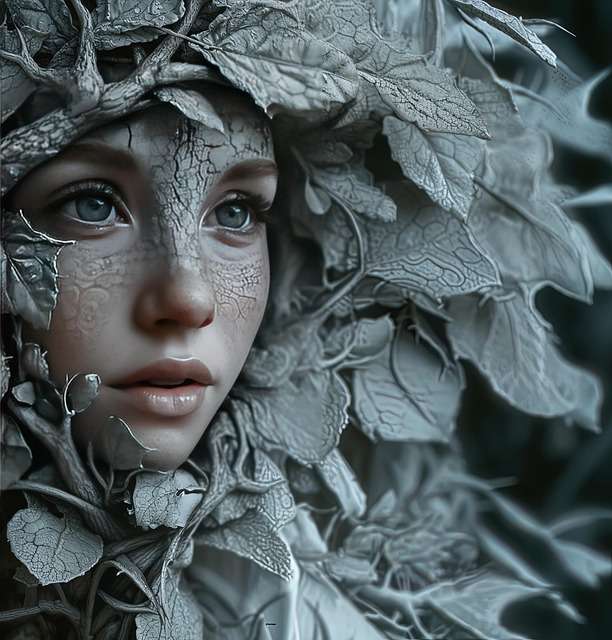
Forest Spirits Unveiled: Not One Family Tree
As you might expect, there are complications when these three terms get lumped together: two of them are related, and one of them isn’t even from the same mythology. “Dryad” and “nymph” both originated in ancient Greece; same mythological family, same root system. “Sylph” is a word that came along, about four hundred years later, and it didn’t come from the Greeks at all — it was invented entirely by a Swiss alchemist with a flair for naming things. We’ll get to him later. First, let’s deal with the parts of this that are, or look like, “family.”
Dryad vs Nymph: Cousins in the Same Family
Nymphs make up a broad category of woodland beings. They are minor nature deities, each one bound to a particular kind of landscape. Naiads are the nymphs that haunt rivers and springs. Oreads keep to the mountains. Nereids belong to the sea. Dryad is another branch of that same tree (pun fully intended): specifically, a tree nymph. The word comes from the Greek drys, “oak” — the original dryads were oak-spirits before the term loosened up to cover trees generally. And within the sub-category of dryads there’s an even narrower version: the hamadryad, bound to one single, specific tree. Harm the tree and you harm her. Kill it, and depending which version of the myth you’re reading, she goes down with it.
So “dryad vs nymph” was never really a fair comparison. It’s the same relationship as werewolf vs lycanthrope: every dryad is a nymph. Not every nymph is a dryad.
Where Sylphs Actually Come From (Hint: Not Olympus)
Sylphs don’t trace their origins to Greek mythology at all. They were invented in the 1500s by Paracelsus — a real alchemist, not a storyteller — as part of a four-part system of elemental spirits: gnomes for earth, undines for water (Paracelsus’s own label for undines was “nymph” — a word choice that’s been confusing people for five hundred years), salamanders for fire, and sylphs for air.
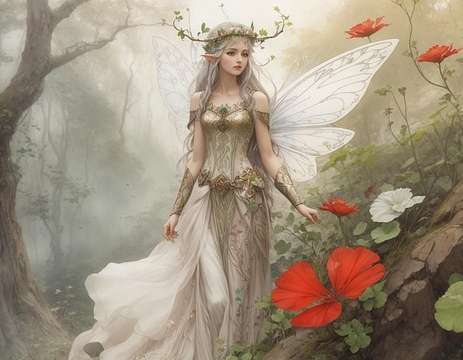
Here’s the detail that actually explains why sylphs keep getting dragged into forest-spirit conversations in the first place: Paracelsus called them Sylvestris, from the Latin sylva — “of the forest.” He was naming an air spirit after wildness and woods, not because sylphs had anything to do with trees, but because that was the word he had that meant “untamed.” Remember, in the late medieval/early modern era, woodlands and forests were still wild, frightening places, full of feral beasts and monstrous things that were even worse. So, for four hundred-some years, fantasy fiction took that naming choice and ran with it. Now sylphs turn up in games and books, standing shoulder to shoulder with dryads and tree nymphs like they always belonged there.
And since Paracelsus never described what a sylph looks like beyond “air, mortal, soulless until proven otherwise,” pop culture filled the gap the laziest way possible: by calling them fairies. Ask most people to settle “sylph vs fairy” and they’ll shrug — to them it’s the same small winged thing, just with a fancier name. It isn’t, but the line’s been blurred for long enough now that even serious reference works don’t fight it very hard anymore.
Dryads, Nymphs, and Sylphs: Pure Chaos on Menelon
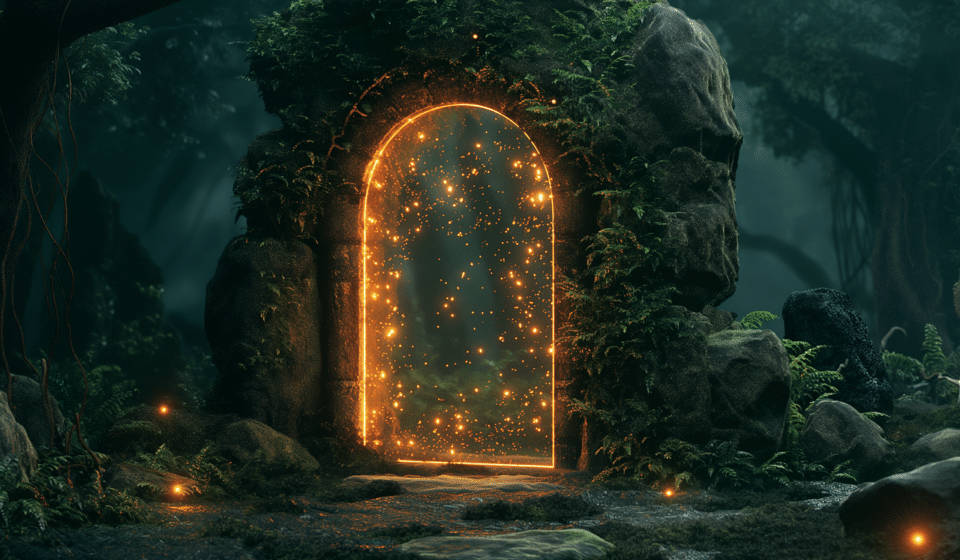
As we’ve said before, the world of Menelon has no dedicated races of dryads, nymphs, or sylphs. And yet, mortals who live in woods and woodlands often report seeing exactly these shapes in the deep forest: a tree with a face and a voice, a figure that seems woven out of river-light, something airy and quick that never quite lands long enough to look at straight on, something else that slips from tree to tree in the deep heart of an ancient oak grove.
None of them are what they seem. In fact, they are faelings, just like those we described as wearing faun and satyr shapes in a recent post, borrowing whatever form chaos hands them for as long as they feel like staying. A faeling doesn’t care that a dryad is technically a type of nymph, or that a sylph belongs in a cool, breezy forest. It’ll wear all three in the same afternoon if the mood strikes, and it will absolutely let you keep calling it the wrong name the whole time, because watching you get it wrong is half the fun (the other half might be a drunken revel, or stealing some of your fresh-baked bread, or seducing your brother. It’s that kind of world).
Building Your Own Forest Spirits (Please, Not Another Tolkien Copy)
If you’re building nature-spirit species in your own setting, the first real world-building question is NOT “what does it look like” — that’s the easy part. A better first question might be “what purpose do forest spirits serve?” Pick an answer that seems right for your world, then ask more questions and follow the logic (or illogic) until you have no more questions.
“How did they really originate?” is a good question to include. It should be paired with, “what are the common beliefs about their origins?” because the truth and what people think is the truth are often very different. The common myth version should almost always be stranger, and more interesting, than what you can find in folklore.
So: are dryads, nymphs, and sylphs the same thing? Two of them are cousins. One of them snuck in from a completely different family reunion four hundred years later and nobody’s bothered by that. Unless you’re in an elven wood on Menelon, and that sylph that just appeared brought a yeti (the monster, not the fancy beverage coolers) along with it for fun.
If you’ve read our post on fauns and satyrs on Menelon, you already know the fae there take their shapes straight out of chaos itself — forest spirits are just the latest proof.
If Menelon has caught your imagination, we’d love for you to visit it in What God Has Ordained, Book One of our epic romantasy series, The Legacy of Chandar — available now!
What do YOU think? If you were to meet one of the three in a wood — dryad, nymph, or sylph — which would you prefer? Tell us in the comments, we’d love to hear it!
We use AI as a tool in our creative process — for research, drafting, editing, and keyword optimization. All content contains our human creative output and reflects our own creative vision, voices, and over-riding editorial judgment.
The Menelon Gazette
Enjoyed this? There's more where that came from — free reads, lore, and stories from behind the page, delivered straight to your inbox. No spam, unsubscribe at any time.