

If you’ve spent any time in fantasy reader spaces lately, you’ve probably run into Romantasy and LitRPG — separately, and usually being talked over by two very different crowds. Romantasy readers love tropes like slow burns, fated mates, and morally gray love interests. LitRPG readers are tracking stat blocks, arguing about the best skill trees, and cheering their favorite character’s level-up as if they were sports heroes. Two genres, two fandoms, but historically, not a lot of overlap.
That, however, is starting to change. Let’s talk for a bit about what LitRPG romantasy actually is, how it differs from romantasy, and the meaty places where the crossovers happen.
What Is LitRPG, Exactly?
LitRPG is short-hand for “literary role-playing game”. It is a genre that takes the visible mechanics of a role-playing game, like character sheets, dice, monster stats, and so on, and uses them as a core structural element of the story. It owes that vocabulary to both traditions: tabletop RPGs like Dungeons & Dragons gave the genre its bones (levels, classes, XP, parties, quests) decades before MMORPGs layered on guilds, raids, and the feel of a persistent virtual world.
Here are a few things that define the genre:
- Stats and leveling. Characters in the story have numbers attached to them, defining their characteristics: strength, intelligence, or whatever the world’s system tracks. Those numbers change as the plot progresses.
- System messages. Quest notifications, skill unlocks, loot drops — shown right on the page, the same way they’d show up on a character sheet or a pop-up in a game.
- Quests with real stakes. Ugh, who actually likes grinding? But, the best LitRPG doesn’t put readers through that just for grinding’s sake. In LitRPG, all quests carry consequences and affect the plot.
- A world that runs on rules. Magic, combat, and skill progressions all reflect a defined system the reader (and the character) can learn to read as easily as print.
And in case you were wondering, this is a genre with real scale behind it. Shirtaloon’s He Who Fights with Monsters has over 50,000 ratings on Goodreads at a 4.34 average, which gives you a sense of how big, how devoted —and how interested in numbers — this readership already is.
Okay, But How Does One Level Up a Romance?
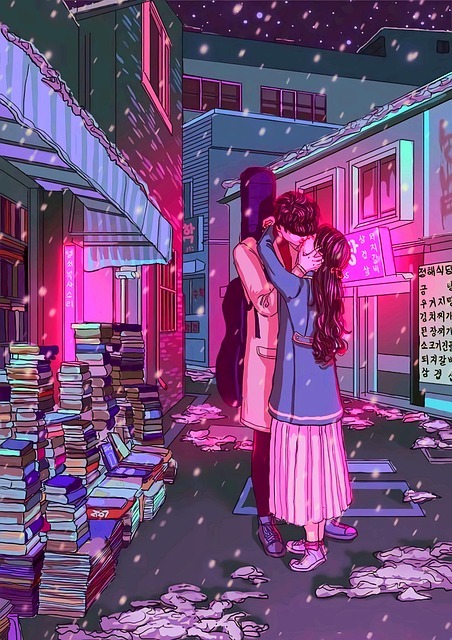
That’s a hilarious question, and it’s a good one because it can’t be reconciled in a straight-forward way. Romantasy is all about the emotional stakes: longing, tension, the ache of a relationship that isn’t resolved yet. LitRPG runs on structural stakes, such as: will the build work? Will the party survive? Will the character make the next tier in time? LitRPG romantasy is what happens when a book asks both questions at once, then lets the answers depend on each other. On the page, it looks like a relationship that levels up alongside the characters. It’s a skill tree that only unlocks because of who’s fighting beside you. And it could be a romance with genuine narrative weight, running through a world built on visible rules instead of vibes alone.
So far, LitRPG takes up a very small corner in the genre — you won’t find shelves of it the way you will for enemies-to-lovers romantasy. But it’s growing. Bloodprice by Bainin, book six of the Paths of Akashic series, is tagged Fantasy, LitRPG, Romance, and Humor. That’s a clear and current example of authors treating the “romance + LitRPG” combo as its own thing, not just a random subplot.
How It Differs From “Mainstream” Romantasy

It’s worth taking a minute to be precise here, because labels get used so loosely. “Mainstream” romantasy can be set in any fantasy world with any kind of magic system, or none at all — the genre is defined by how the romance elements drive the plot, full stop. LitRPG romantasy adds a second, specific requirement: the world has to run on visible game mechanics. If there’s no stat screen, no leveling, no system voice narrating what just happened, it’s not LitRPG — it’s just romantasy with a video or tabletop game aesthetic.
And we should also talk a little about LitRPG’s harem subgenre, which is its own well-established and more popular branch of the crossover. The stories are written to address a different contract with the reader than romantasy’s. In this subgenre, multiple love interests happen by design, rather than the single-central-relationship structure most romantasy readers expect. Neither is “more legitimate” than the other — it’s just a preference. Both are responding to different promises, so it’s worth knowing which promise a book is answering before you pick it up.
Interested? Here Are Some Titles to Start You Off
This crossover subgenre is still finding its footing, so it’s silly and/or pretentious to say there’s a ranked “best of” list for LitRPG yet — this is a genre that’s still being created right around us, in real time. But, you might begin with Bloodprice (or any of the earlier Paths of Akashic books) if you want to see how the combination works. Keep an eye on LitRPG-focused communities like LitRPG Reads and the Goodreads LitRPG shelf, where new romance-forward entries tend to surface first, often from indie authors before anyone else has caught on.
So, if you are a romantasy reader who is curious what a stat-driven world would do to your favorite tropes, or a LitRPG reader who wants the relationship to matter as much as the raid, this is a genre worth watching. It’s still young. These are its “early days.” And that’s exactly why you should look into it now — especially if you are a gamer and a romantasy lover!
Genre-blending is kind of our whole thing here at Metaphor Publications — if a fantasy world with real stakes and a slow-burn romance at its center sounds like your kind of read, our own romantasy, What God Has Ordained, goes live on October 1st.
Have you read any LitRPG romantasy that’s actually pulled off both halves well? Point us to it in the comments — we’re building our own list as we go.
We use AI as a tool in our creative process — for research, drafting, editing, and keyword optimization. All content contains our human creative output and reflects our own creative vision, voices, and over-riding editorial judgment.
The Menelon Gazette
If you are interested in more content like this (plus freebies, access to premium content etc.) subscribe to our newsletter for more from the world of Menelon and its creators!