
Image by Seth Metoyer from Pixabay
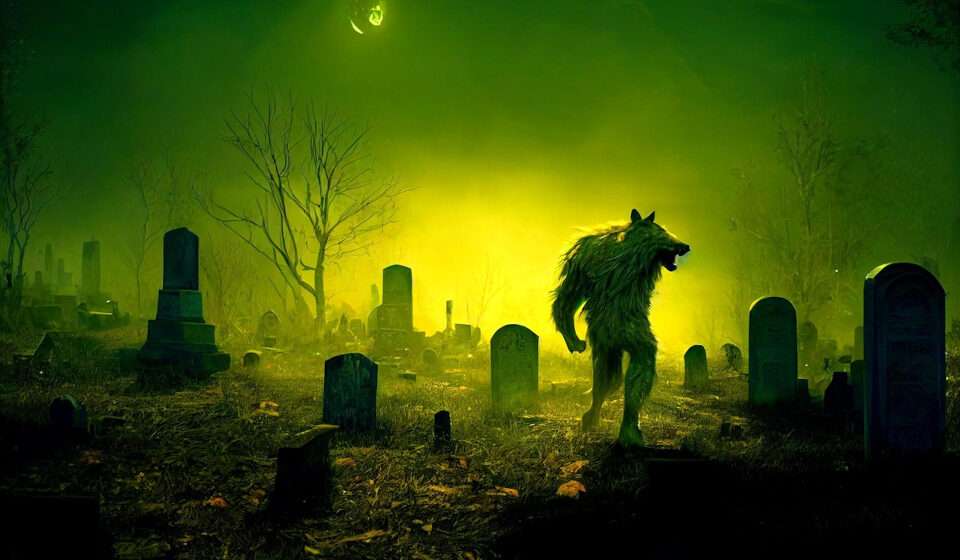
Robert Eggers’ Werwulf opens on Christmas Day. From the trailers, it’s got a cursed farmer, a fog-bound English countryside in the 1200s, something stalking the edges of the village. A werewolf movie, for Christmas? Well, why the hell not.
With Halloween upon us and a wolf-shaped shadow already on the calendar for the end of the year, it seems like a good time to untangle something that’s tripped up writers and readers alike: what does lycanthropy actually mean? Is it the same thing as being a werewolf, or something stranger? And why does every fantasy novel or horror movie seem to invent its own rules for the same creature?
What Does Lycanthropy Actually Mean?
It got this name a long time ago. In Greek: lykos means “wolf,” and anthropos means “man.” Lycanthropy’s meaning is simply that: a werewolf. Same creature, older label.
Lycanthropy — the condition of being one — started out as something stranger than a curse, though. Ancient writings described it as a kind of madness in which a man believed he was a wolf. Only later did the word evolve into meaning an actual transformation, which tells you something about how old the confusion between “cursed” and “deluded” really is.
The Greeks had a story to go with it, naturally. In Ovid’s Metamorphoses, King Lycaon of Arcadia serves human flesh to Zeus at dinner — a spectacularly bad idea, as it turned out. Zeus turned him into a wolf for it. That’s about as old as a werewolf tale gets in the Western tradition, and the curse was already built in, right from the start. It was punishment, not biology. So if you ever see “werewolf vs. lycanthrope” floating around somewhere, that’s two names for the same curse, not two different ones.
Werewolf vs Shapeshifter: Not Quite the Same Thing
Here’s where lycanthropy sits inside a much bigger category. Let’s dig into it and see what we find.
Shapeshifter is the big tent, and anyone or anything that changes form belongs under it. They are the Scottish and Irish selkies who slip out of their seal skins, the Japanese kitsune who take human shape, and my personal favorite, the Greek sea-god Proteus, who changed form rather than answer a straight question. And on Menelon, faelings are the ultimate shapeshifters. They take their forms at random, straight from chaos itself.
A werewolf — a lycanthrope — is one resident of that tent, not the whole thing. The word werewolf comes from Old English, wer meaning “man,” so a werewolf is, literally, a man-wolf. And what sets a werewolf apart from the selkies and the kitsune isn’t the wolf part. It’s the lack of choice. A selkie can decide to walk the land or swim the sea. A werewolf almost never gets to decide — the change comes as a curse or an affliction, often a danger to whoever’s standing nearby. And always, there’s still a human life in there somewhere, and in the best stories we get glimpses of it as the tale progresses. That’s where the real horror lives.
The Characteristics of a Werewolf Curse
When that curse started requiring outside triggers — moonlight, silver, a bite — is where this gets interesting, because almost all of it comes right from where you’re already thinking: Hollywood, and chiefly by means of Universal’s 1941 film The Wolf Man. The older stories blamed spells or curses, not moonlight. And not every werewolf in those older stories was a monster, either: in Bisclavret, a twelfth-century poem by Marie de France, the werewolf is a wronged but noble baron who turns out to be more honorable than most of the humans circling him.
Which is something I think about when I’m writing, honestly. The rules of the curse are mostly just set dressing. The interesting werewolf stories are the ones where the person is still in there.
Werefolk on Menelon (As Seen by the Humans Who Live There)
That’s more or less where Menelon picks up the thread, too — because on Menelon, most people don’t care about taxonomy any more than Marie de France’s audience did. They care about what’s out there in the dark, and whether the human being is still in there.
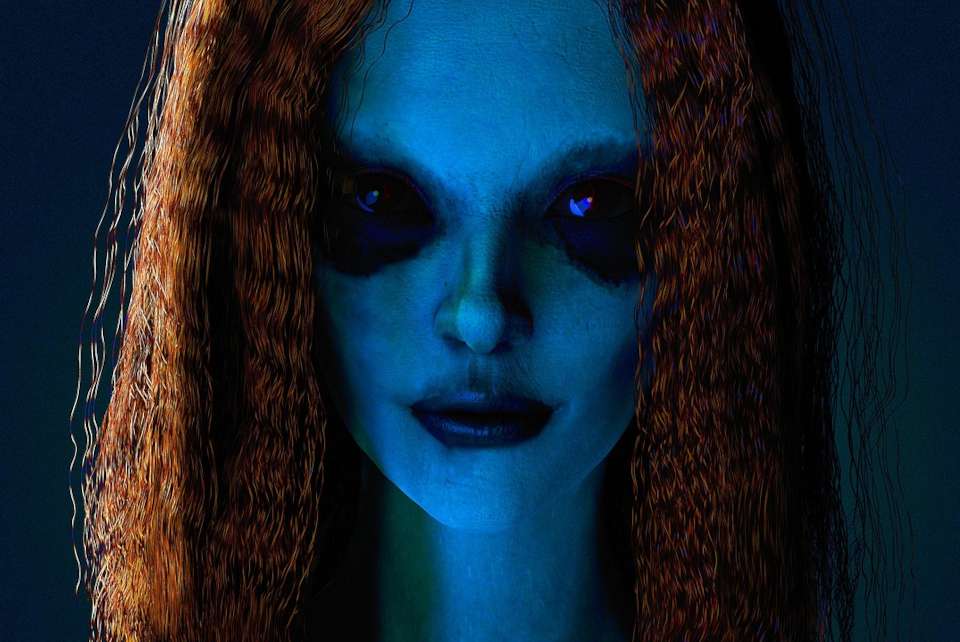
There are werefolk on Menelon, and they aren’t all wolves — there are wolves, of course, but also panthers and jaguars, hyenas, bears, and rats. Strictly speaking, only the wolves are lycanthropes; the rest are werefolk of other kinds, but try explaining that distinction to a farmer at midnight.
And then there are the stories that make travelers stop in mid-sentence: a werewolf that comes bounding up the road on legs like balloon animals, or one with a plait of colorful ribbons for a tail — ribbons where its fur ought to be. That’s not folklore getting creative. That’s a faeling, mid-prank, wearing whatever shape chaos handed it that morning, delighted at how long it can keep a grown adult arguing with their own eyes in the middle of the road. The humans telling those stories do work it out eventually, but that doesn’t make the retelling any easier. You don’t forget the night something with balloon-animal legs looked you dead in the eye and grinned.
Some of the stories aren’t funny at all. Nobody’s laughing in those, and nobody’s claiming a faeling did it, either. The people who tell them don’t raise their voice. They don’t need to.
If you’ve read our post on fauns and satyrs on Menelon, you already know the fae there take their shapes straight out of chaos itself. So on Menelon, same as everywhere else werewolves turn up, “what is that thing, exactly?” is worth asking before you decide how afraid to be.
If Menelon has caught your imagination, we’d love for you to visit it in What God Has Ordained, Book One of our epic romantasy series, The Legacy of Chandar — available now!
What do YOU think? If you could take one animal’s shape on purpose — a choice, not a curse — which would you pick? Tell us in the comments, we’d love to hear it! (On Menelon, you might want to be careful what you wish for.)
We use AI as a tool in our creative process — for research, drafting, editing, and keyword optimization. All content contains our human creative output and reflects our own creative vision, voices, and over-riding editorial judgment.
The Menelon Gazette
Enjoyed this? There's more where that came from — free reads, lore, and stories from behind the page, delivered straight to your inbox. No spam, unsubscribe at any time.